The Conservation of the Wellington “Wimpy” Nose Art
Small objects often present complex conservation challenges, and this recent project demonstrated how valuable volunteer support can be in addressing them. Working together, our volunteer team assisted in the conservation of a fragile painted textile object—The Wellington “Wimpy” Nose Art, a new acquisition—which exhibited structural weakness, surface soiling, and instability in parts of the painted surface.
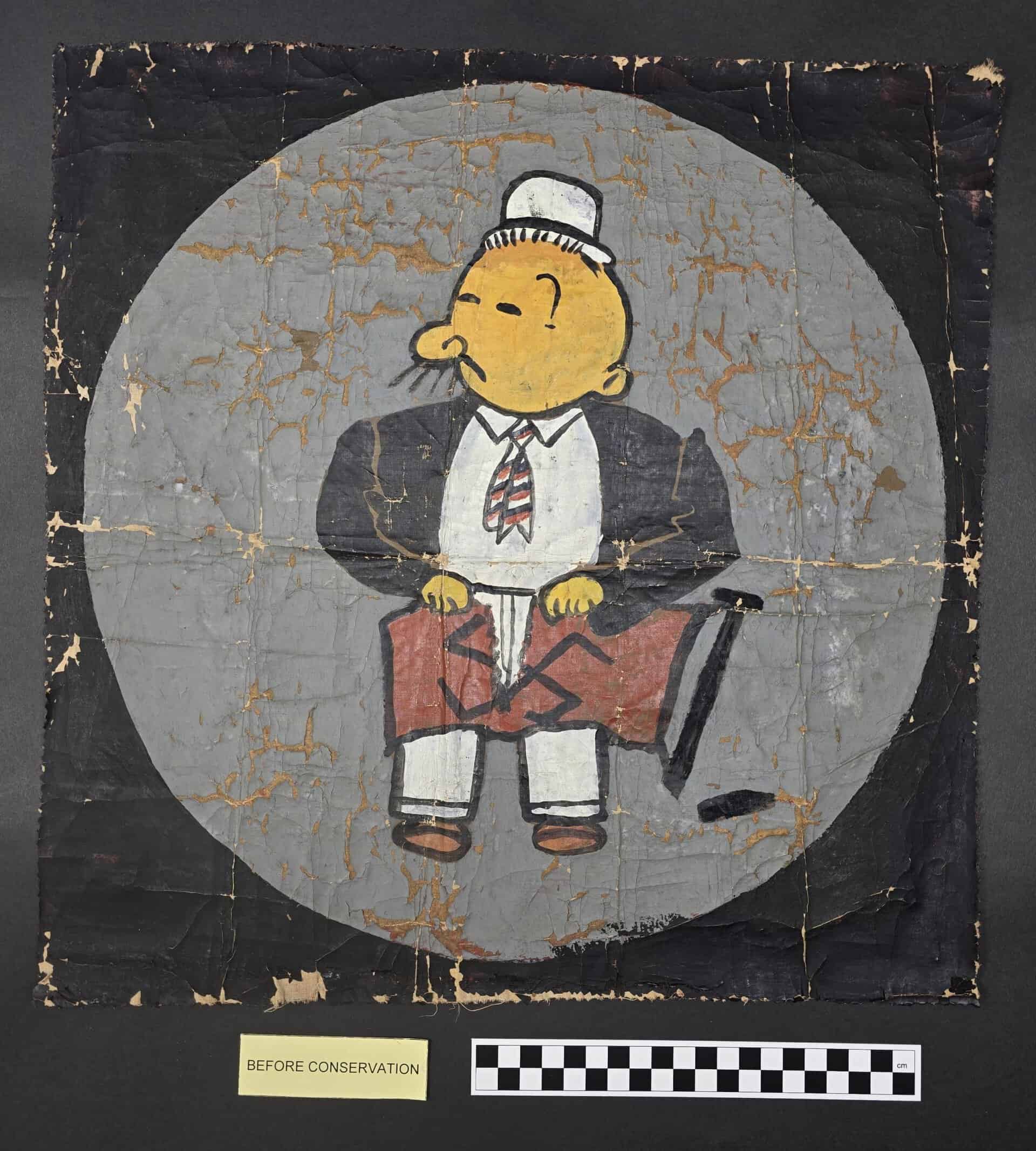
Figure 1, Before treatment
A key stage of the project involved ultraviolet (UV, a.k.a. black-light) illumination examination, an important diagnostic tool in conservation. Using UV light at 365 nm allowed us to assess the condition of the painted surface beyond what is visible in normal light. This examination helped to identify subtle abrasion, differentiate between original and potentially altered areas, and detect variations in materials through their fluorescence.
UV analysis also informed key treatment decisions. It confirmed that most of the paint layer was original and stable, while highlighting minor areas of surface wear and possible later interventions. This understanding was essential in guiding a minimal and ethical approach, ensuring that only necessary interventions were carried out.
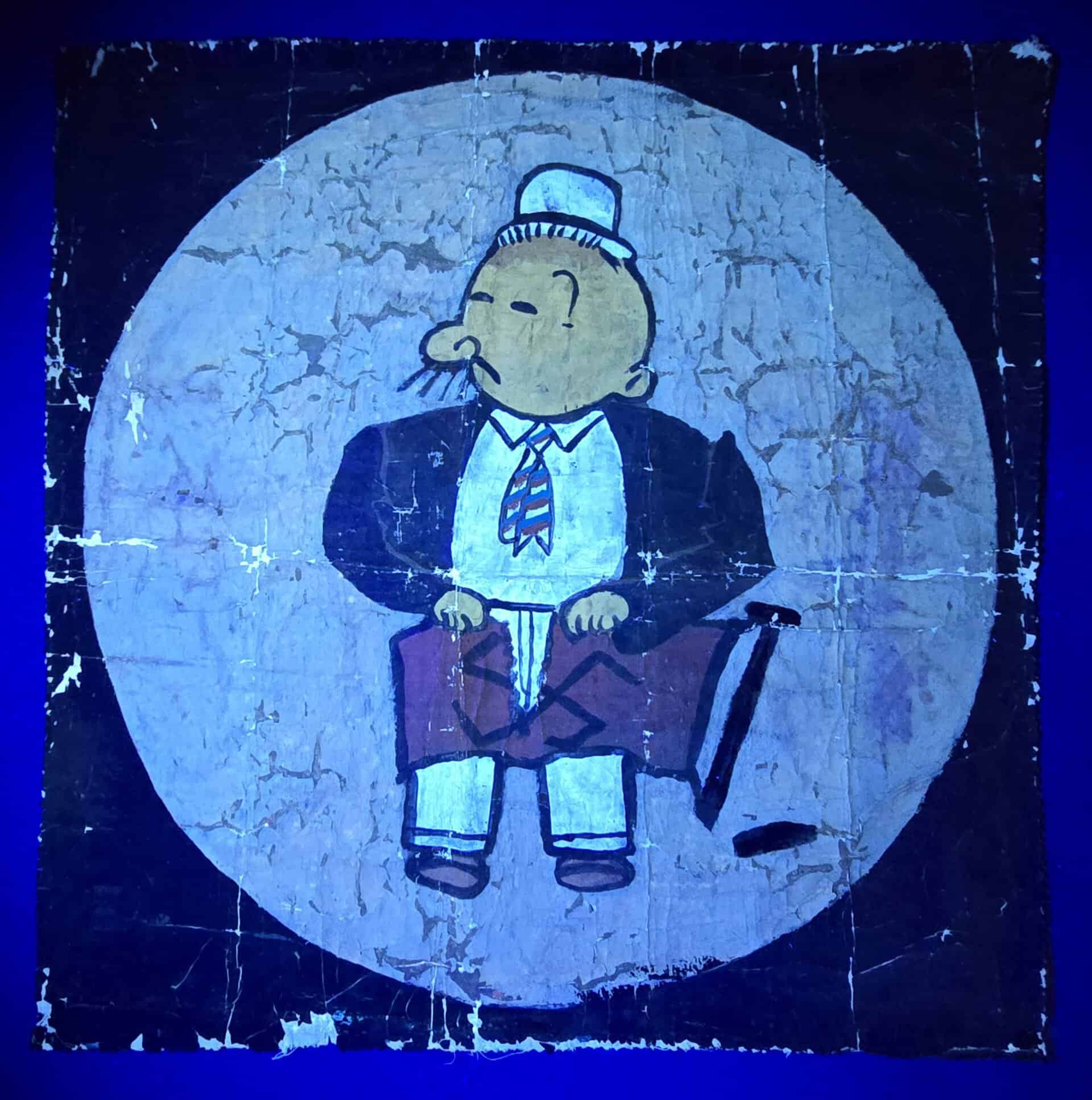
Figure 2, Ultraviolet (UV 365nm) a.k.a. black light illumination examination
The treatment also included structural relining on the recto support, using a compatible mesh to reinforce the weakened canvas and improve overall handling stability. This intervention provided a secure foundation for further conservation work without compromising the original material.
Volunteers were involved throughout the process, contributing to careful surface cleaning, supporting the object during stabilisation, and assisting with controlled flattening to improve its overall condition. A key part of the work included introducing the team to consolidation, where they helped to stabilise vulnerable areas of the surface through a controlled and closely supervised procedure.
Areas of loss were addressed through selective loss compensation, carefully limited to visually significant elements of the design. This was followed by retouching, using reversible materials to reintegrate the image while ensuring that all additions remain distinguishable upon closer examination. These steps improved visual coherence while maintaining the integrity and authenticity of the object.
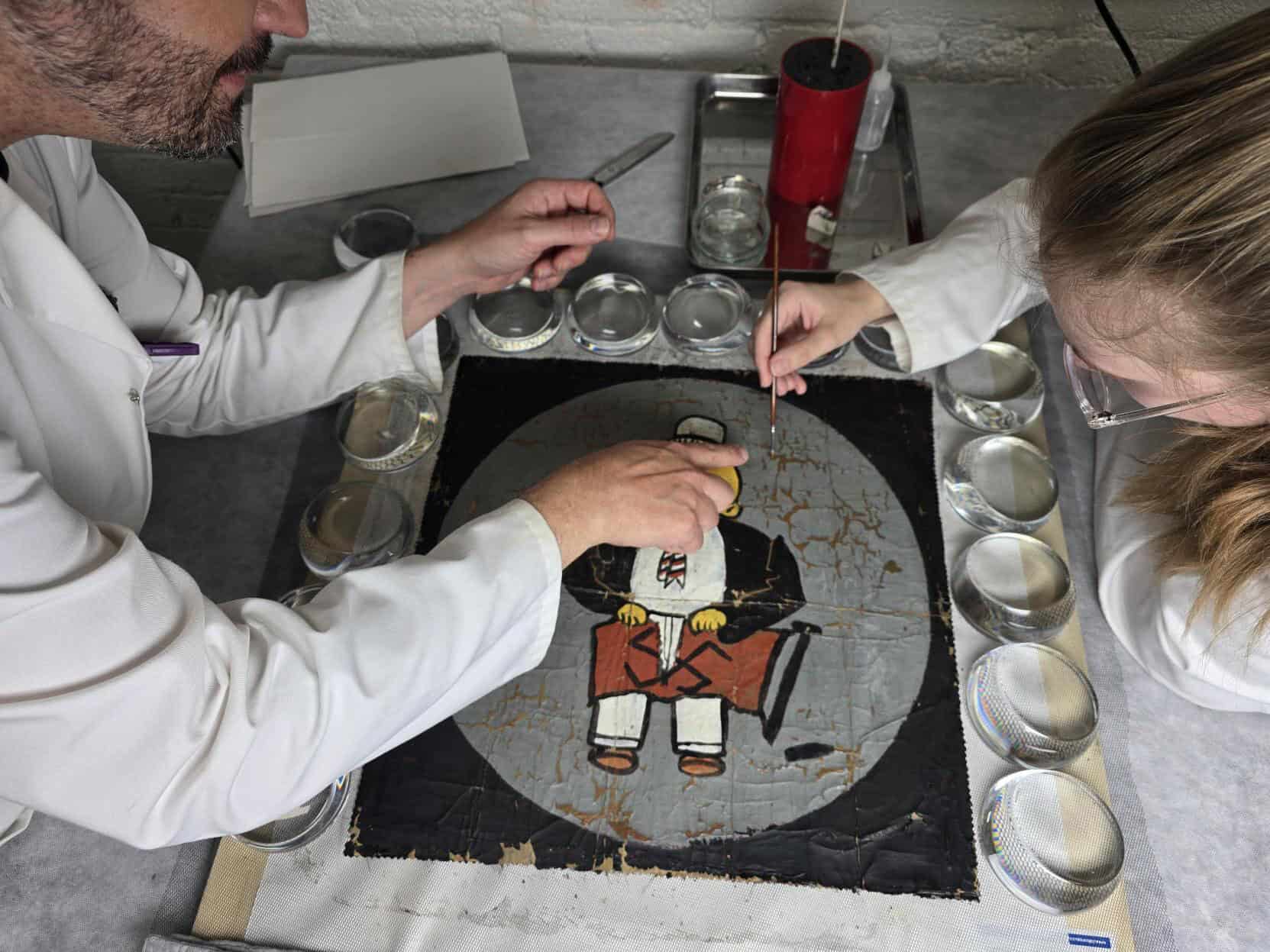
Figure 3, Interventive Conservator Peter Zetye supervising
one of our volunteers during consolidation treatment.
The treatment focused on reinforcing the structure and preparing the object for safe handling and display, demonstrating how gradual, well-managed interventions can significantly improve stability.
This project highlights how, with the right guidance, volunteers can participate in meaningful conservation work. It is a reminder that small objects—and small, careful actions—play an important role in the long-term care of our collections.
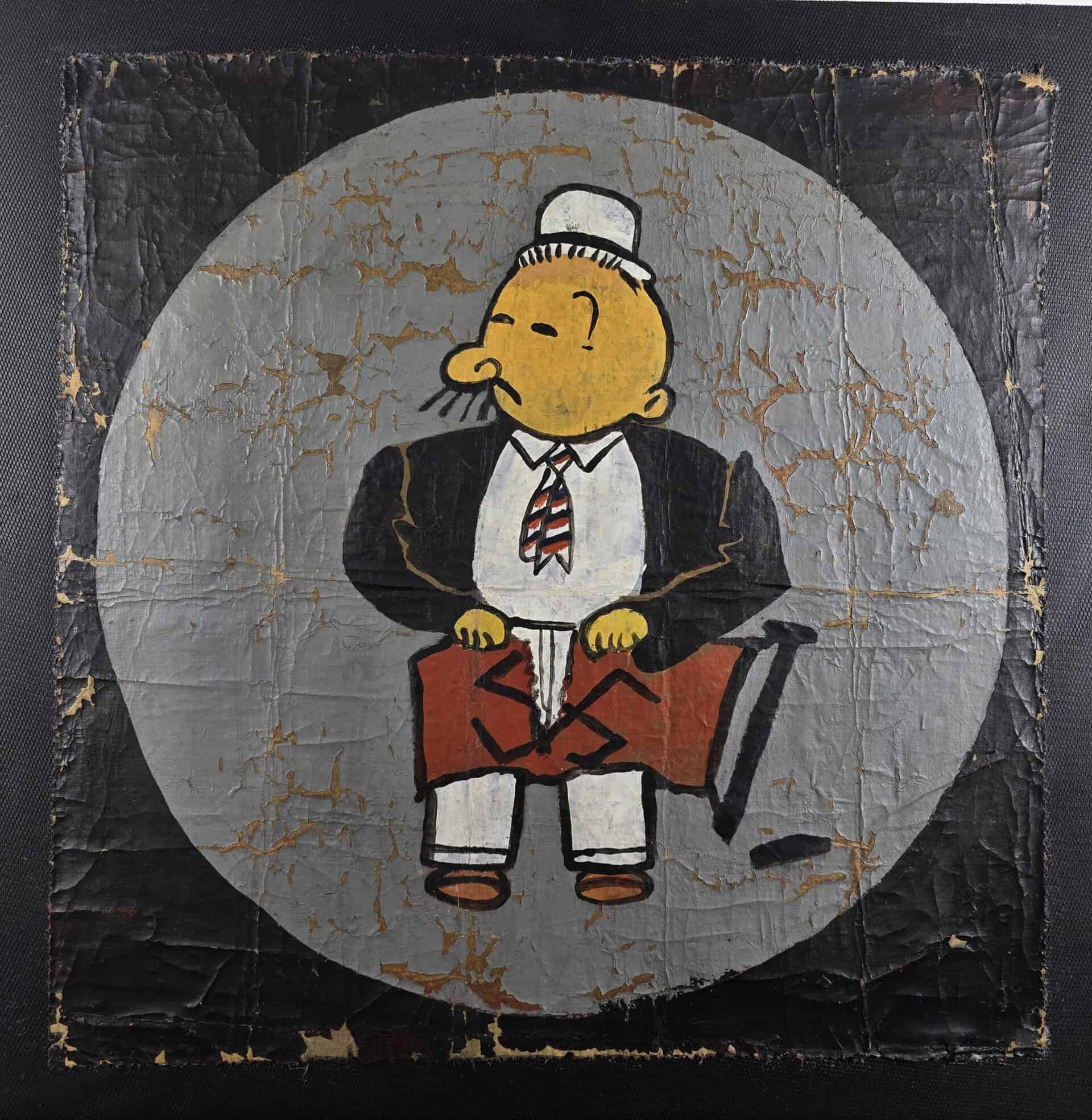
Figure 4, The “Wimpy” nose art following conservation treatment, prepared for display.
The panel will go on display at our Midlands site in August.
Fun Fact
Did the name “Wimpy” ring a bell? J. Wellington Wimpy’s love of hamburgers was so iconic that it inspired the name of the Wimpy burger franchise, which first opened in the UK in the 1950s and still exists today. His famous line, “I’ll gladly pay you Tuesday for a hamburger today,” lives on in both popular culture and fast-food history.
The Wimpy franchise was once so popular that by the 1970s there were over 500 Wimpy restaurants across the UK. It became a symbol of post-war optimism and American-style dining—all thanks to a cartoon character who never seemed to have cash on hand.
Interested in Volunteering?
If reading this blog has inspired you to volunteer at the Museum. Please click on this link to find out what the latest volunteering opportunities are at our London, Midlands and Stafford sites.
