At first glance, this artwork might look simple—black and white, expressive, even a little rough. But Greenham Common (1981), created by artist Peter Kennard, carries both historical significance and a delicate physical story that requires careful conservation.
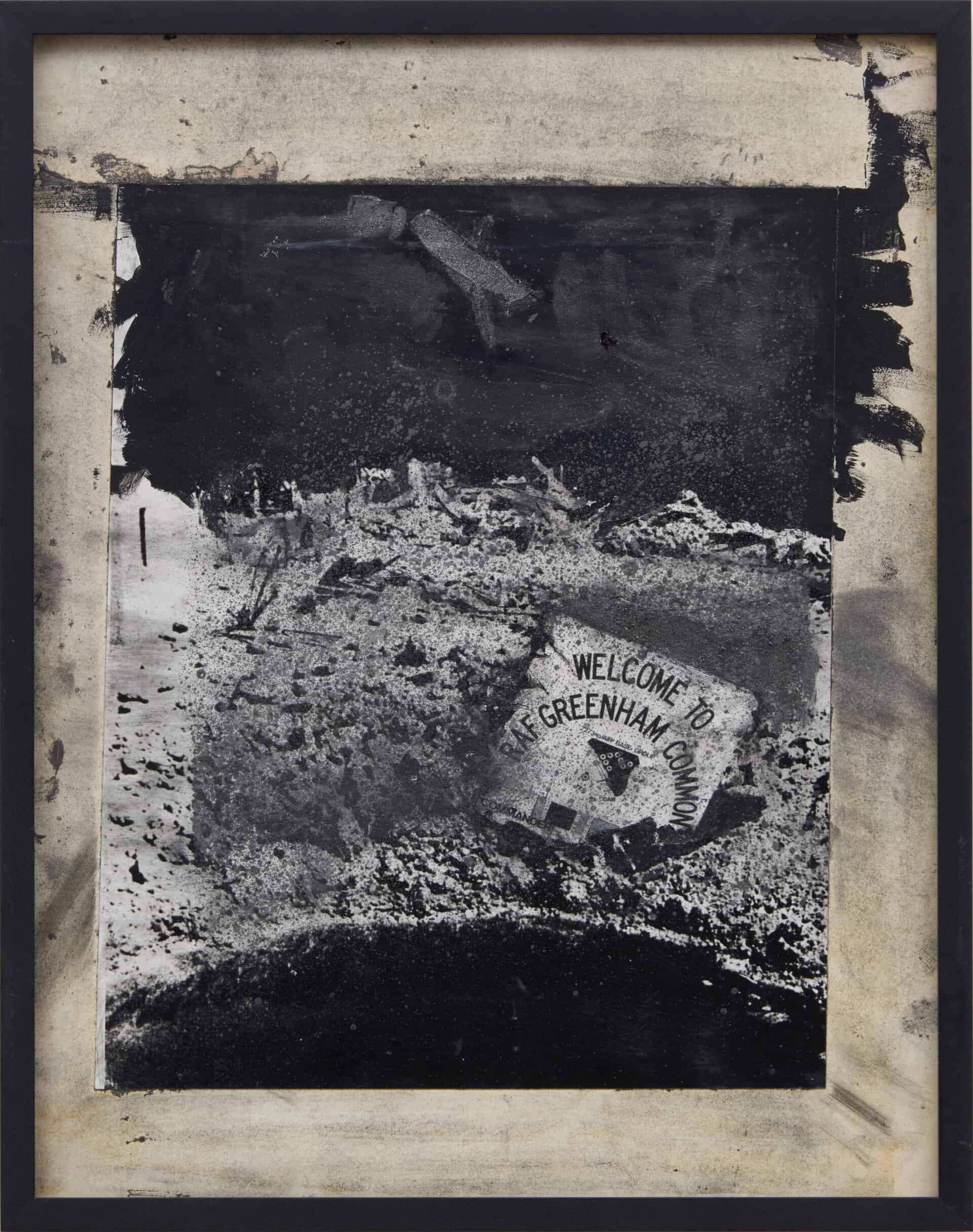 Peter Kennard’s Greenham Common (1981) X008-9484
Peter Kennard’s Greenham Common (1981) is a striking and politically charged artwork, but it is also a fragile and complex object that requires careful conservation. Created using photomontage techniques, the work combines gelatine silver prints with gouache and graphite on card. This layering of materials gives the artwork its distinctive visual impact, yet it also makes it particularly sensitive to damage over time.
Kennard, born in 1949, is widely recognised for his powerful visual responses to political events, especially those relating to war and nuclear weapons. This artwork refers to the arrival of cruise missiles at RAF Greenham Common during the early 1980s, a period marked by protest and public anxiety. The image shows a sign at the entrance to the airbase, which the artist has disrupted and worked over with graphite. The resulting surface appears scarred and unstable, evoking a sense of contamination and tension.
Source: Collections – RAF Museum Collections
A Delicate Condition
When the artwork was examined, it became clear that, although generally stable, it is also extremely delicate. The mixed media surface shows fine cracking within the gouache paint layers, and in some areas, there is evidence of flaking and lifting. The underlying photographic layer displays signs of ageing, including possible silver mirroring, while small crystalline deposits suggest past environmental fluctuations.
The reverse of the artwork is equally revealing. It contains numerous marks, stains, and residues left from previous framing and handling. There are also visible fingerprints and traces that relate to the artist’s own process. These marks, although they might appear as damage at first glance, are in fact an important part of the object’s history and authenticity.
Unframing for Preservation
The artwork was originally housed in a frame that included Perspex glazing. However, this was not considered appropriate for long-term preservation. Perspex can generate static electricity, which attracts dust and may disturb sensitive materials such as graphite. For this reason, the artwork was carefully removed from its frame in order to reassess its condition and improve its long-term care.
Respecting the Artist’s Hand
One of the most important aspects of conservation is ethical decision-making. In this case, particular attention was given to the marks on the reverse of the artwork. These fingerprints, smudges, and traces of handling may have been left by the artist during the creation or installation of the work. Removing them would risk losing part of the artwork’s story. Instead, the conservation approach focused on stabilising and protecting the object while respecting its original character.
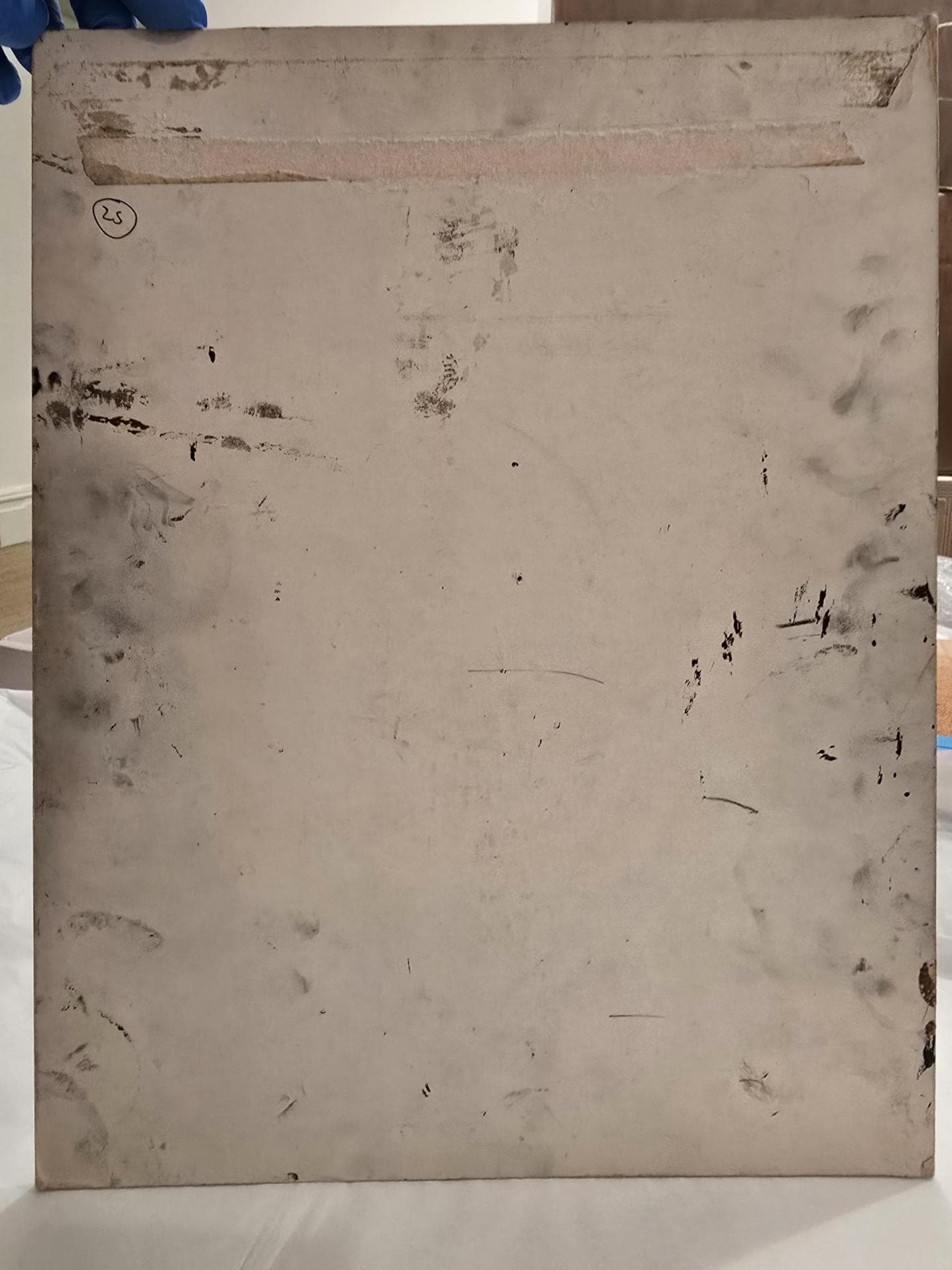 The reverse of Kennard’s artwork
Designing a Bespoke Storage Solution
To ensure the artwork’s ongoing preservation, a bespoke storage box was designed and constructed in-house. This box was made using conservation-grade, chemically stable materials, including acid-free board, archival card, and specialist foam.
The structure of the box was carefully planned to fully support the artwork and prevent movement. Internal divisions made from corrugated board help to stabilise and supporting the object, while soft foam elements provide cushioning and protection from vibration or impact.
Importantly, the design also allows for a degree of airflow around the artwork. This helps to prevent the build-up of moisture, which could otherwise accelerate deterioration, particularly in such a complex mixed-media object.
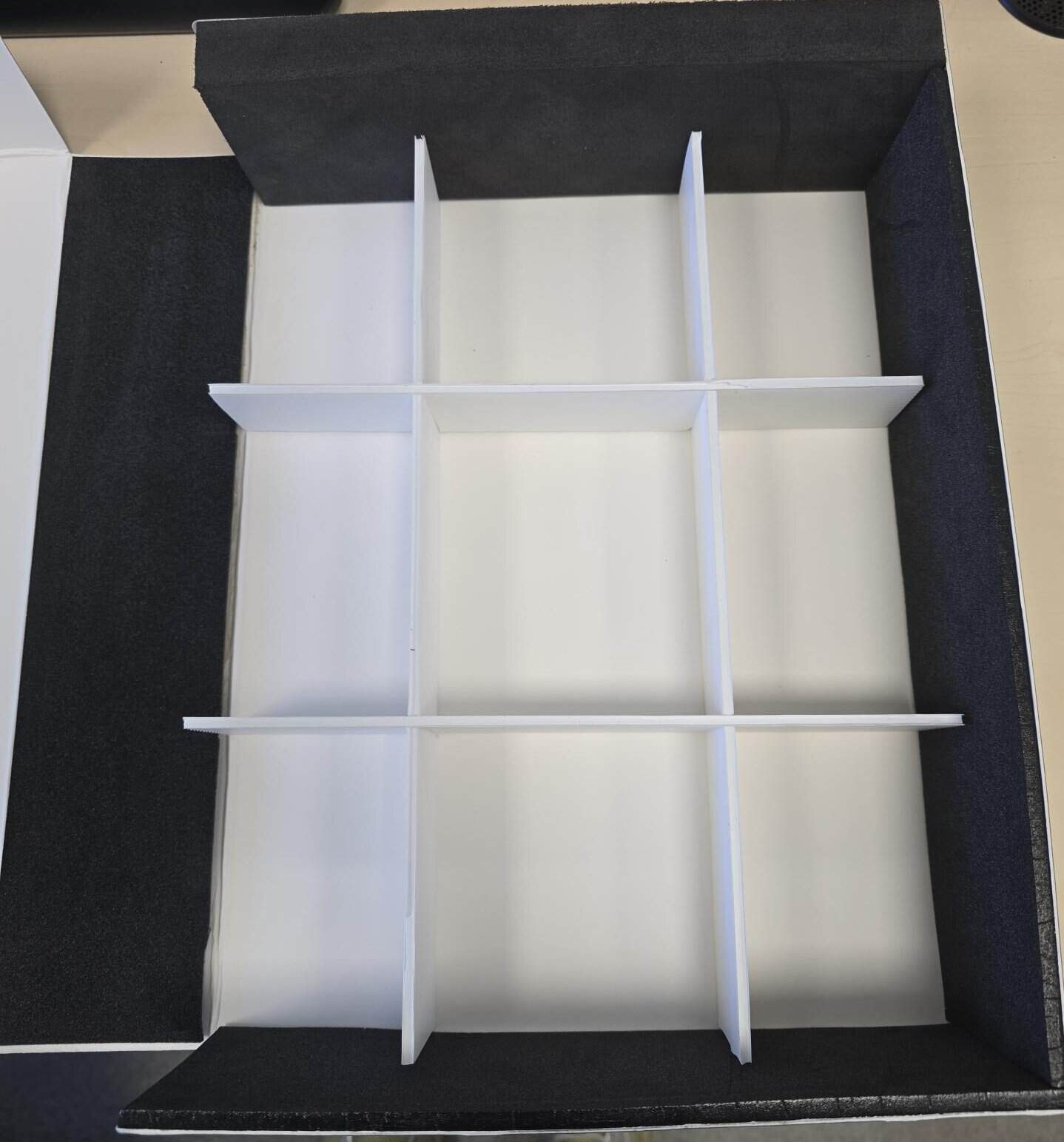 The bespoke box
Preserving More Than an Image
Conserving Greenham Common is not simply about protecting a physical object. It is about preserving a powerful artistic response to a significant moment in history. The artwork captures the political tensions of the early 1980s and reflects the role of art in activism and public debate.
This project demonstrates how conservation involves both practical skill and thoughtful judgement. By carefully assessing the artwork, respecting its original features, and designing a suitable storage solution, it has been possible to safeguard both its material condition and its meaning.
In many cases, the most effective conservation work is not immediately visible. It lies in the quiet, careful decisions that ensure artworks like this can continue to be understood and appreciated for years to come.
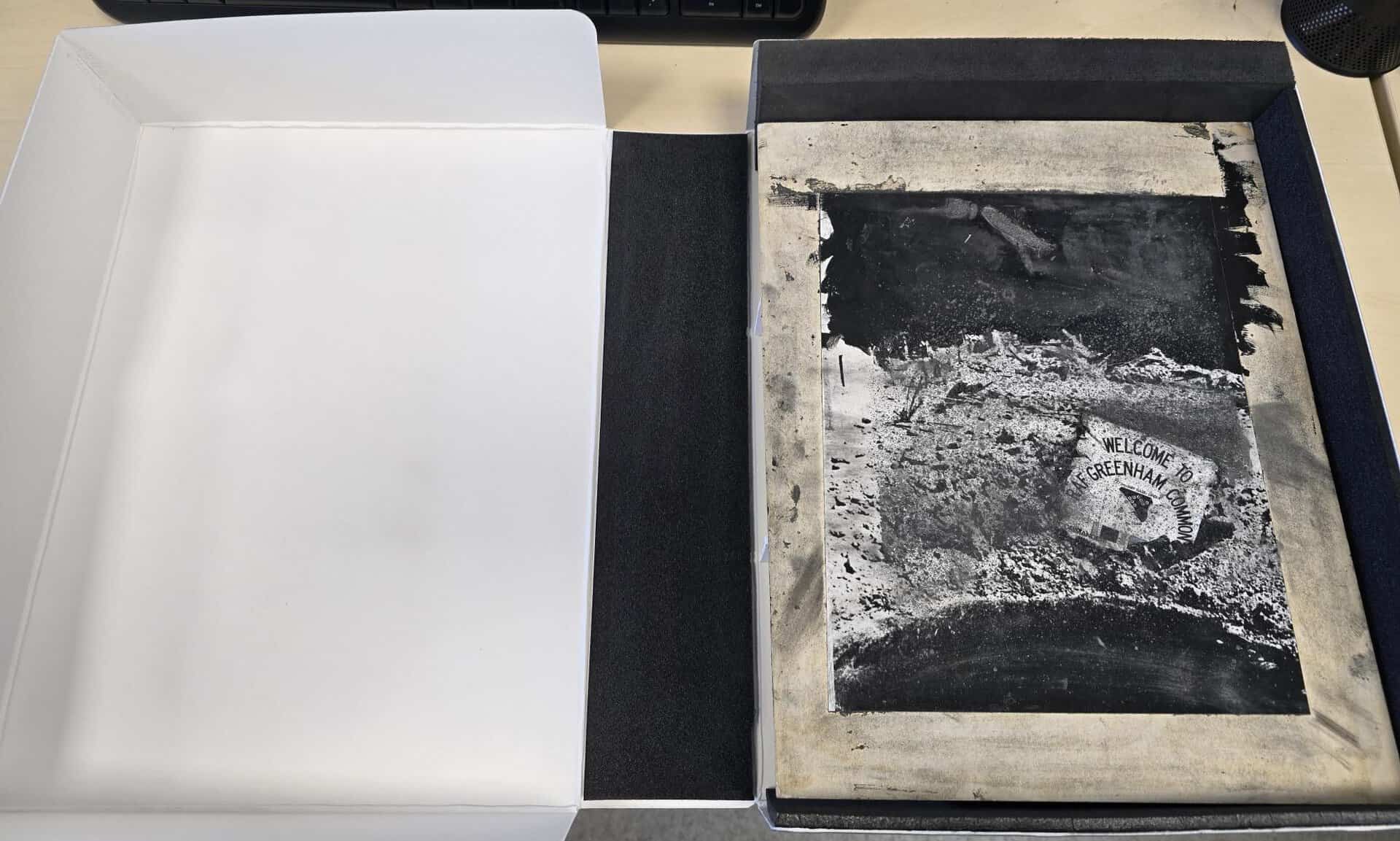 The bespoke box with the mix media artwork contained within.
Fun Fact – Working with Living Artists
Working with living artists can be both exciting and challenging for collection care and conservation. Unlike historical objects, contemporary artworks often involve unusual materials and experimental techniques, which can behave unpredictably as they age.
For this reason, the Royal Air Force Museum (RAFM) introduced an artist questionnaire and interview process. This approach allows conservators to speak directly with the artist in order to understand the original intention behind the work, as well as the materials and substances used in its creation.
This kind of collaboration is essential, as it helps ensure that any conservation decisions respect not only the physical condition of the artwork but also the artist’s vision.
