Recent visitors to our London site may have noticed conservation work taking place on the fabric-covered wings of the Blériot XXVII currently on display in Hangar 2 London. This treatment is part of an ongoing project designed to stabilise and preserve the fabric coverings of this important early aircraft.
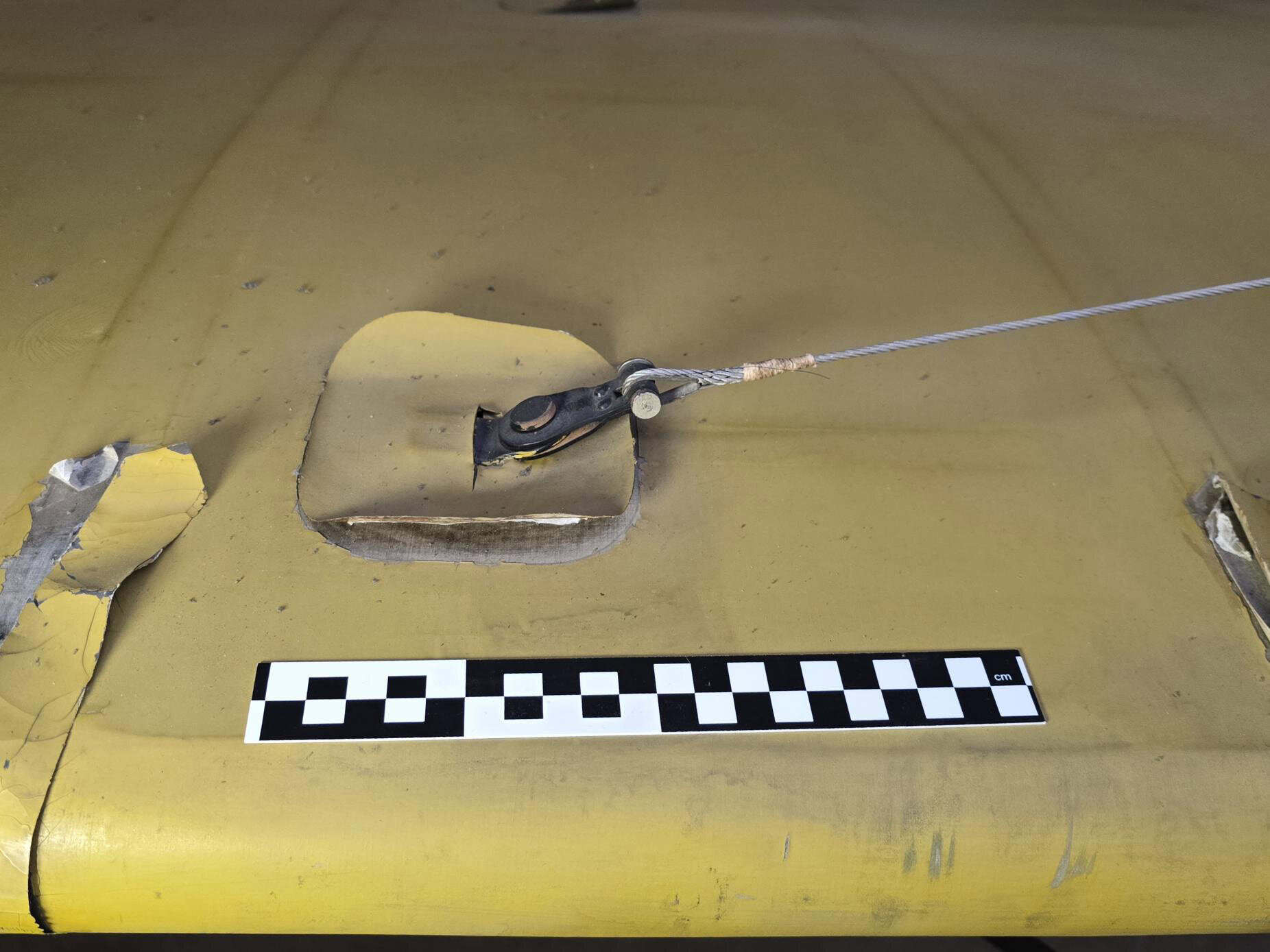
Figure 1, Close-up of the Blériot XXVII prior to conservation treatment, documenting areas of surface deterioration and fabric damage as part of the object’s condition assessment. Image credit: Peter Zetye, Interventive Conservator, RAFM
Why Do the Wings Need Conservation?
The fabric covering on the wings has developed several issues over time. The Conservation team identified areas where reinforcement patches and strips had curled, lifted, or detached from the main fabric covering.
Whilst these issues are not immediately noticeable to the untrained eye, they require treatment to prevent further, more extensive, damage developing and to ensure preservation of as much of the original construction material of aircraft as possible.
The First Stage: Flattening Distorted Fabric Patches
The first phase of treatment focuses on carefully flattening curved and distorted fabric patches that have lifted away from the wing surface.
As materials age, changes in humidity, tension, previous repairs, and environmental conditions can cause the fabric to deform and lift. Some of the patches on the Blériot wings have developed a noticeable curvature. Not only does this damage the patches but it can also create stress on the surrounding fabric and paint layers.
The conservation team are using a gradual and controlled approach. The distorted patches are being gently encouraged back towards their original shape and position using carefully distributed padded weights placed. These weights apply even pressure while minimising the risk of damage to the fragile painted surface.
The process is deliberately slow. Each area is closely monitored to assess how the aged fabric responds and whether it retains a “memory” of its distorted shape. Conservators also watch for any movement in the paint layers or signs of additional stress developing elsewhere on the wing.
What Can Be Seen on Site?
Those visiting the display area may notice lines of small, padded weights positioned across sections of the wing surface. These are part of the flattening process and are helping conservators gradually reduce distortions without introducing excessive pressure. The treatment is being carried out on gallery, allowing the wings to remain on display while work progresses. The weighting system can be seen in place across the fabric-covered surface, where it is carefully aligned to support specific areas requiring attention.
The aim at this stage is not to achieve an immediate visual improvement but to understand how the historic materials respond and to improve their overall stability before any further treatment is undertaken.
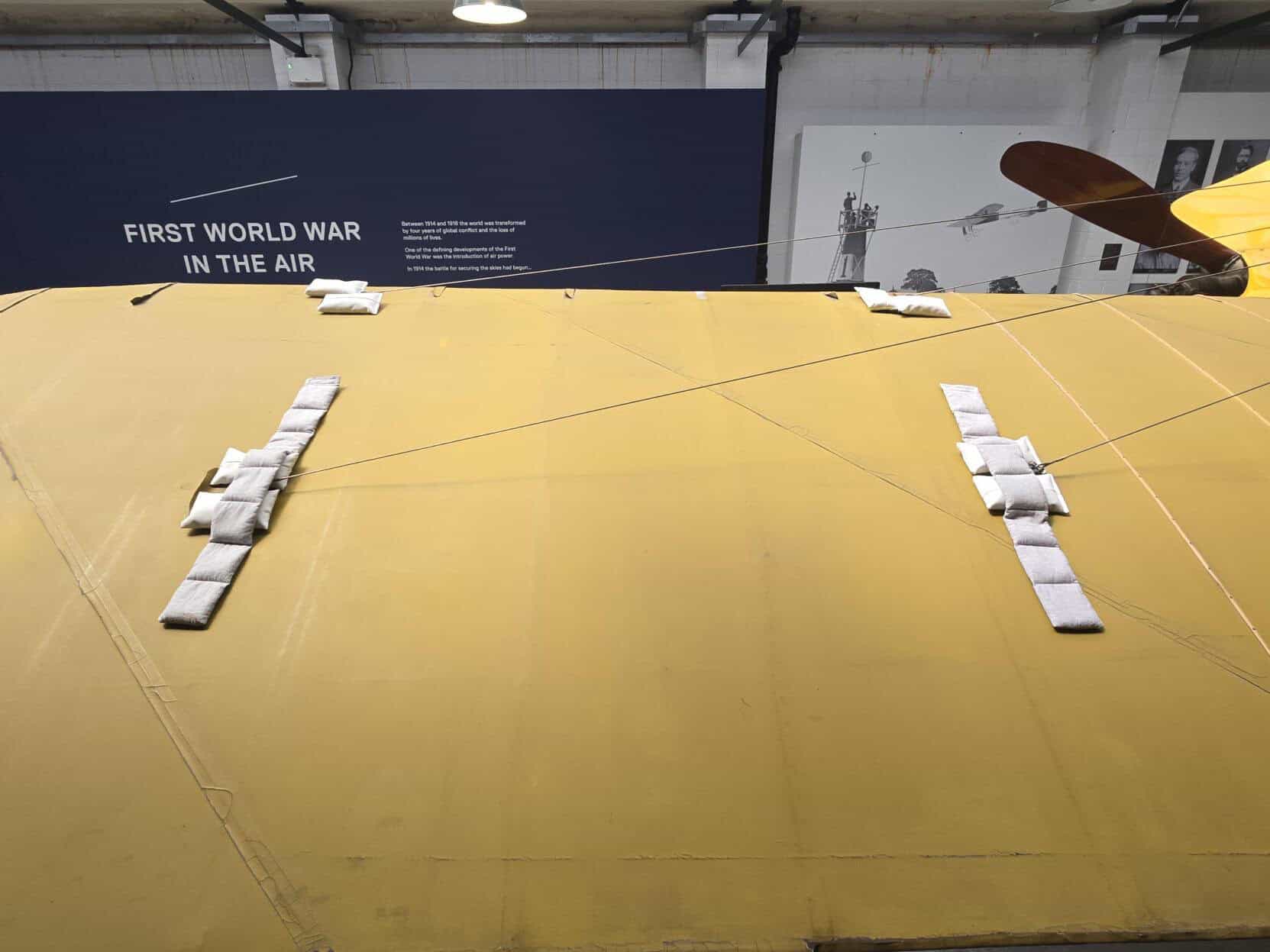
Figure 2, Close-up of the Blériot XXVII during conservation treatment, showing temporary support weights used to stabilise and reshape the historic wing covering. Image credit: Peter Zetye, Interventive Conservator, RAFM
Preserving Early Aviation Heritage
The Blériot XXVII represents an important period in the development of early aviation. Conservation treatments such as this help museums balance public access with the long-term care of historic objects. While much of the work may appear subtle, these careful interventions play a vital role in ensuring that fragile aircraft structures survive for future visitors to study and enjoy.
We will continue to share updates as treatment progresses and reveal more about the fascinating conservation work taking place behind the scenes.
What Happens Next?
Flattening the distorted patches is only the first part of a wider conservation programme. Once the behaviour of the fabric has been assessed, conservators will continue with additional treatments that may include stabilising fragile paint layers, removing unsympathetic previous repairs, and carefully re-adhering detached patches where necessary. All work follows the principles of minimal intervention and reversibility wherever possible.
Every stage of the project is being thoroughly documented through photographs, written records, and condition monitoring to ensure a complete treatment history is preserved for future generations of conservators and researchers.
A Collaborative Conservation Effort
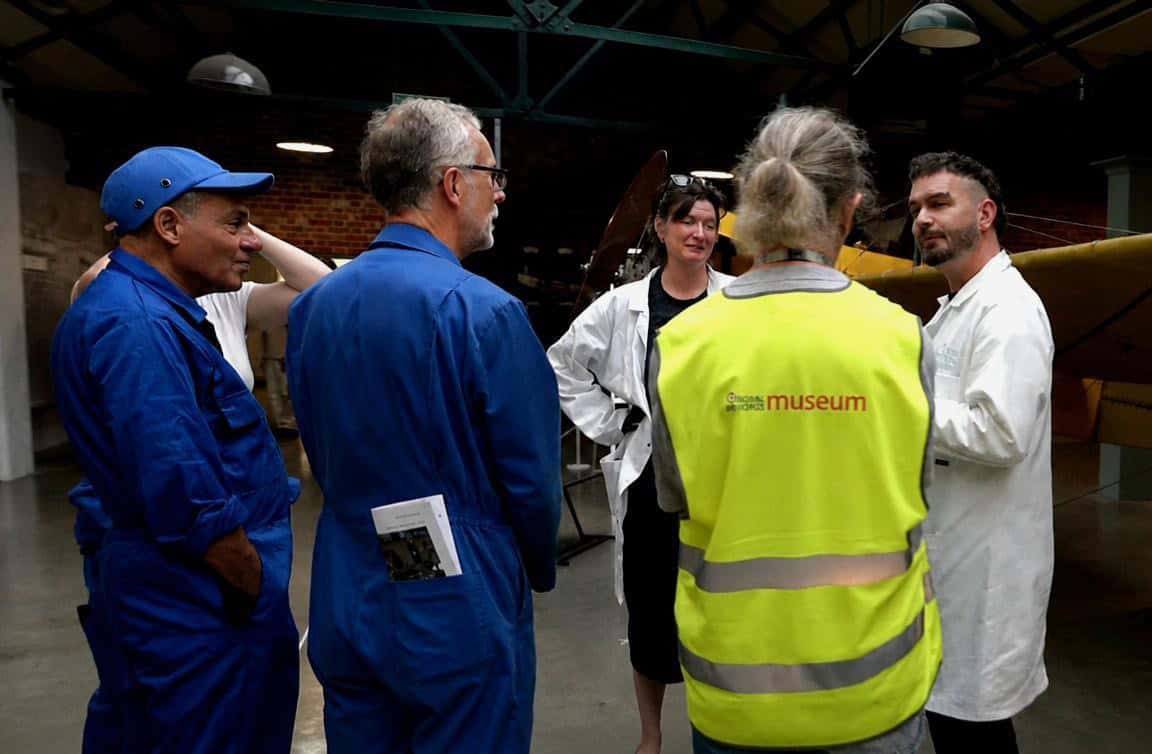
Figure 3, On-site conservation consultation between Amy Seadon, Peter Zetye and volunteers, discussing treatment options for a historic aircraft.
Image credit: RAFM Trustees.
This conservation project is being delivered under the supervision of the Collection Care and Conservation team at the Royal Air Force Museum, headed by Amy Seadon Collections Care and Conservation Manager. The treatment programme is led by Interventive Conservator Peter Zetye and is being carried out in close consultation with Amy and the rest of the Conservation team. This ensures that all decisions are carefully considered and appropriate for the long-term preservation of the aircraft.
