Virtual Lecture
RAF Aircraft Procurement: Air Ministry Specifications and Design Competitions
Image Credit: BAe Systems
On Thursday 10 December 2026 at 6pm, Tony Buttler will look at the system used to procure new aircraft between the 1930s and the 1950s. This lecture will be hosted virtually via Crowdcast.
Talk Outline
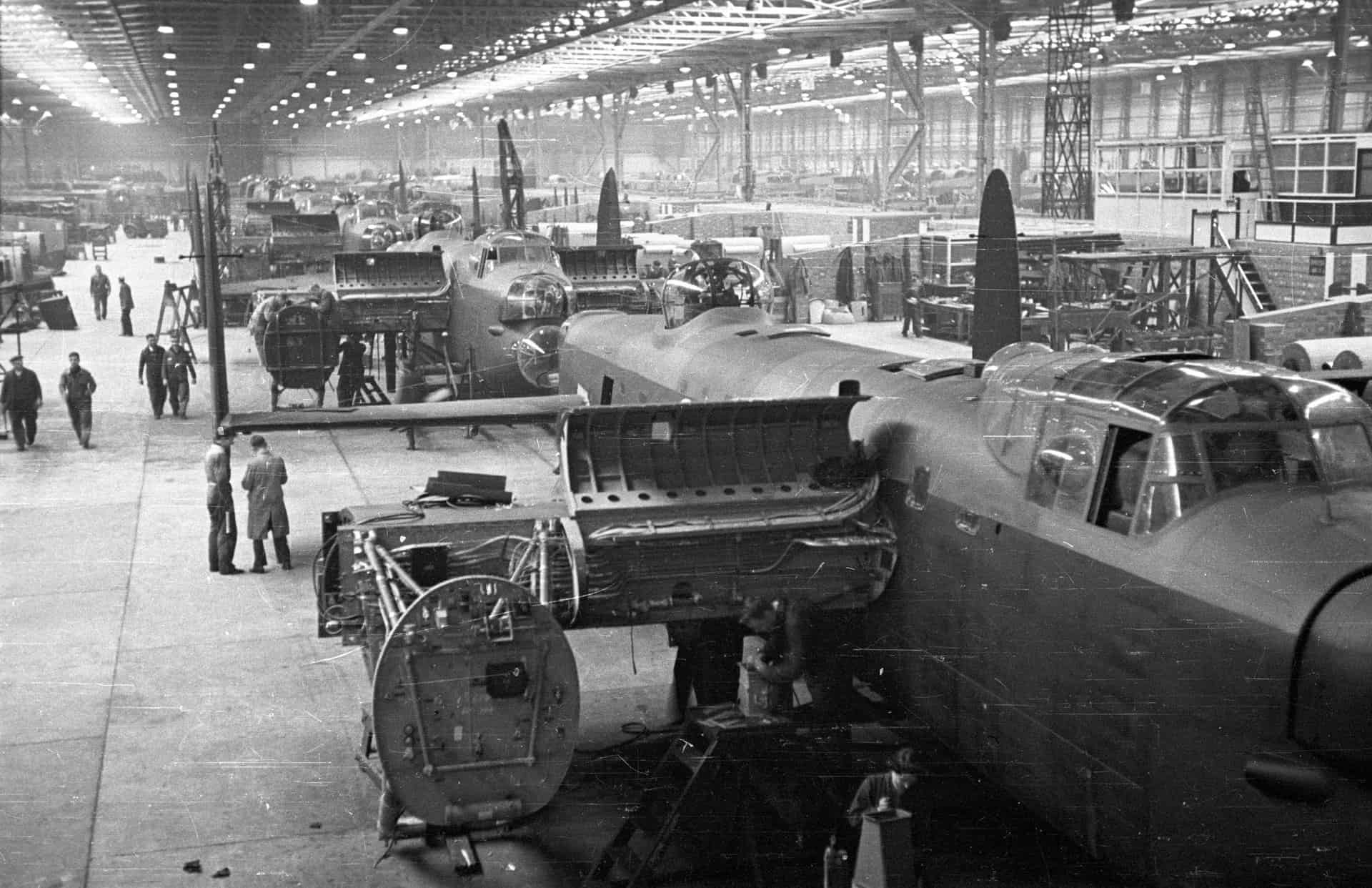
This presentation looks at the system used to procure new aircraft from the 1930s onwards through to the end of the 1950s, when the amalgamations within the aircraft industry reduced the number of manufacturers and design teams. If the RAF required a new aircraft type – fighter, bomber, trainer, transport or helicopter – the standard process would usually begin with the Air Ministry issuing Specifications and Operational Requirements, documents which outlined the desired performance, weight and other requirements. These would then be passed to the various aircraft manufacturers for them to submit design proposals within an industry Tender Design Competition. Not all companies would submit of course because some of them would specialise in certain categories – for example Hawker concentrated almost entirely on fighter design throughout the firm’s existence.
In theory the most promising designs would be ordered as prototypes, with hopefully production to follow, though this was not always the case. And sometimes an outstanding private venture proposal could be ordered without any competition – the Mosquito was the most obvious example to come from this route. In addition, aircraft produced specifically for research would not always come within this system.
This process will be illustrated with selected competitions over 20 years – probably B.1/39 of 1939 for a heavy bomber, F.6/42 which eventually produced the Sea Fury naval fighter, B.35/46 (V-Bombers), F.3/48 and F.4/48 (jet fighters), F.155T (Heavy Interceptors), R.156T (Supersonic bomber) and OR.339 (projects leading to TSR.2). And not every competition would be ‘official’ – an unnumbered requirement in 1948 produced the UK’s first supersonic fighter prototypes. Other nations – in particular America, employed a similar process in procuring new military aircraft. The speaker will concentrate on British fighter and bomber design, having spent almost his entire career as a historian researching these specific aircraft types.
Livestream
To attend virtually, register via Crowdcast.
About Tony Buttler
For twenty years Tony Buttler worked as a metallurgist at High Duty Alloys analysing and testing aluminium and titanium forgings manufactured for aircraft and defence equipment. It was during this period, working in the aircraft industry, that Buttler’s deep interest in military aircraft was established. In 1994 he took a Masters Degree in Information Science and Archives at Loughborough University and since 1996 he has been a full-time aviation historian and author.
He has written 45 major books, numerous titles in the Warpaint series of modeller’s books and well over a hundred articles for all of the important historical aviation magazines. He also presents lectures to branches of the Royal Aeronautical Society and to other aviation bodies and groups. His foremost area of interest and research has always been the design and development of military aircraft covering the period from the mid-1930s to the 1980s. In 2017 Buttler became a member of the Royal Aeronautical Society’s Aeronautical Heritage Specialist Group Committee, and in November 2022 he received the Society’s Specialist Group Award for that year in recognition of his contribution to aviation history. In August 2024 he was made a Fellow of the Society.