Virtual Lecture
“Look Ma! No engines”: Second World War Glider Forces and Op NEPTUNE Joint Planning
On Thursday 28 May 2026 at 6pm, Dr Jeffrey McGovern will highlight the importance of gliders to airborne warfare in the Second World War. This lecture will be hosted virtually via Crowdcast.
Talk Outline
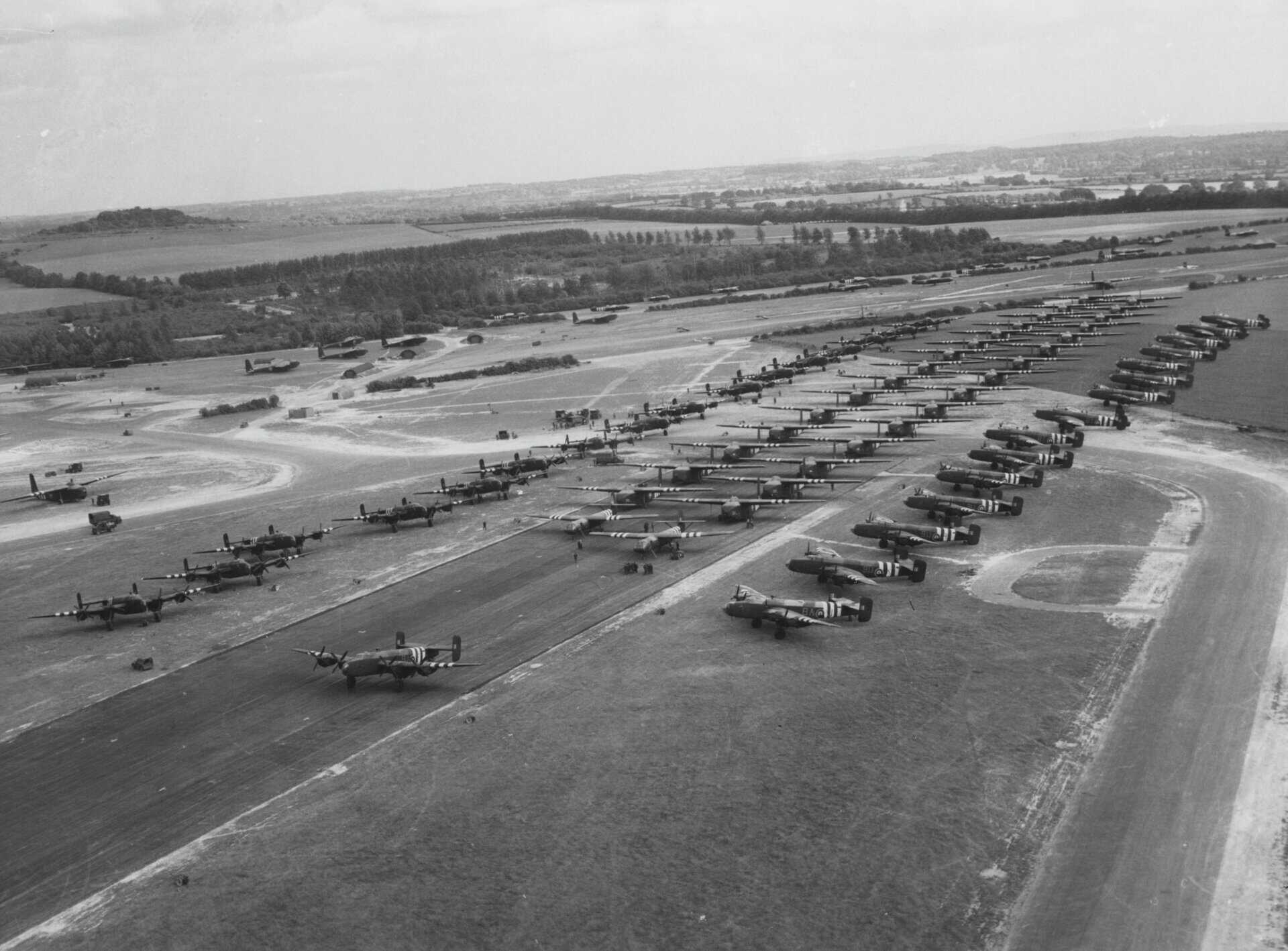
Glider forces were a pivotal component of large-scale Second World War airborne operations. Without the gliders, their pilots, and the men and equipment that they transported into the battlespace, airborne divisions would not have been a viable theatre-level combat multiplier.
Planning for their roles in an operation required intense effort because the glider elements required first, coordination with their own divisional parachute elements and second, a greater level of complexity than for parachute forces in coordination with Troop Carrier forces that delivered them to the battle. Airborne warfare is always a joint endeavour and during the Second World War at times also a combined endeavour.
Joint planning is all about reaching a compromise, a goal that is pitted against the effort of each element desiring that their requirements take priority. Operation NEPTUNE, the assault phase for Operation OVERLORD had nearly a year of planning at the theatre level i.e., at SHAEF and the ground, sea, and air components headquarters.
At the tactical levels, at least for the ground and air forces, serious planning only commenced in February 1944. Air and ground forces rarely look at a problem with the same requirements, but they are required to reach a compromise to meet the commander’s intent. Operation NEPTUNE was the first operation when U.S. air and ground forces deployed a divisional glider component against a prepared enemy.
While there were certainly problems and mistakes made, in the end the role of the glider forces ensured the success of the UTAH beach breakout. Unfortunately, because of the short-lived role for glider forces, air and ground, their importance has been largely relegated to a footnote in the historiography of Second World War airborne operations. This presentation’s goal is to highlight their importance to airborne warfare in the Second World War.
Livestream
To attend virtually, register via Crowdcast.
About Dr Jeffrey McGovern
Jeffrey T. McGovern, PhD, is a U.S. Air Force historian stationed at RAF Lakenheath, Suffolk, England. His Air Force career as a civil servant began in 2013 and his current assignment is his second tour in Europe. He has served with tactical and theatre level Air Force organisations.
Prior to his Air Force career, he served as a soldier in the U.S. Army for eight years, in a variety of infantry units, including four years with the 82d Airborne Division. He writes a blog, “wwiitroopcarrier.org,” that broadly covers US airborne operations in the Second World War and he has appeared as a guest speaker a few times on the YouTube channel “WW2TV.”
He also has experience leading more than 100 battle staff rides for the U.S. military across western and central Europe that focused on twentieth century conflicts. The combination of above experiences has led him to focus on the planning aspects of operations, an oft neglected aspect in the historiography of the Second World War.