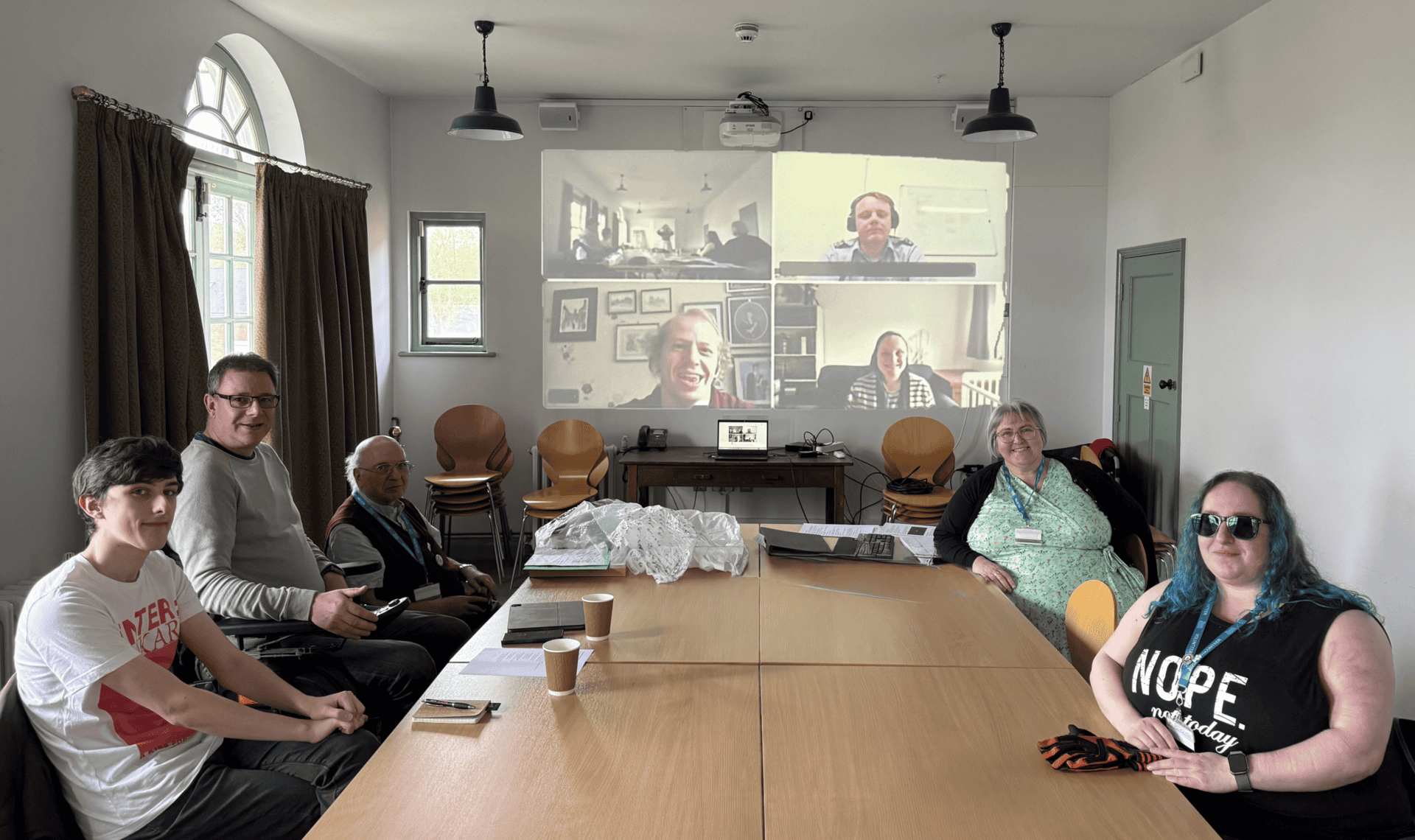
Welcome to the RAF Museum’s Access Advisory Group for the London site. We are a group of people with lived experience of disability who advise and support the Museum in improving accessibility for all.
The group has been active since 2016 and has consulted on many areas within the Museum including exhibitions, branding and facilities. Our next meeting will be in November 2026.
Find out more about what we do below.
Want to join?
Contact the Volunteering Team on volunteering@rafmuseum.org or complete this online form and select Learning and Engagement London and help us to inspire everyone with the RAF story, by offering advice on how we can make the RAF Museum accessible to all.
Projects we have been involved with:
- Implementation of sensory stimuli in new exhibitions as part of the Museum’s Centenary programme, commemorating 100 years of the RAF in 2018
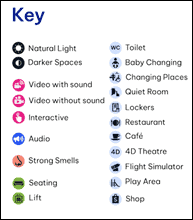
- Development of a Sensory Map
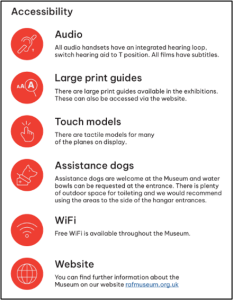
- Development of an Access Guide
- Consultation on the Digital Guide/trails
- Improving the accessibility information available on the website for disabled visitors.
Projects we are currently consulting on:
- Providing feedback on the new branding and accessibility features on the website
- Working with the Archive and Library team to make reading room visits and bookings more inclusive
- Giving feedback on design elements of the new Hangar 1 Exhibition at the Midlands site.
What is required to be a member?
Members should have lived experience of disability (physical or cognitive), or experience of working with or caring for adults with learning difficulties/disabilities.
We hold three hybrid meetings a year, meaning you can participate either online or on-site. The dates are agreed in advance.
Members are expected to attend at least two meetings a year.
We also organise optional site visits to explore areas of accessibility that can be improved. There can also be email communications between meetings to ask for advice and opinions.
Benefits of volunteering with us:
- Become a part of the wider Museum network with invites to events at the Museum and volunteering opportunities with other departments
- A chance to help bring accessibility and inclusion to the forefront of the visitor experience, through your lived experience
- A space where opinions are heard, valued, and – where possible – acted upon
- Access to training opportunities.
Meet Our Members:
Learn more about some of our amazing volunteers
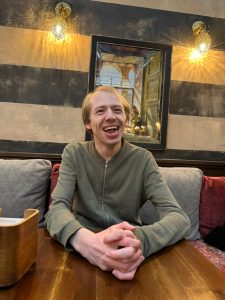
Phil joined the AAG in September 2025 and has Cerebral Palsy which affects his walking, speech and dexterity. He has two degrees related to tourism and is passionate about Accessible Tourism. He runs his own business taking Boccia (the most inclusive sport in the world) into different settings and does some occasional access consultancy work for Beyond Bendrigg at the Bendrigg Trust. He says “it has been interesting being involved with Reading Room project. The group is made up of people with different experiences, which is great and have enjoyed being part of the team.”
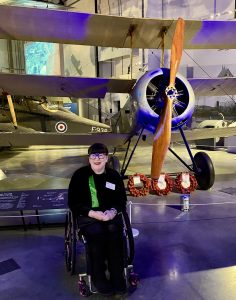
Mary has been part of the AAG since 2019 and considers it to be ‘very much an extension’ of her own work, as an accessible aviation and inclusion consultant. She has been a regular visitor of the Museum since childhood and even had her first date with her partner here. She worked in software and services for 28 years and learnt to fly in 2012; enriching her life and opening new opportunities to work and volunteer in aviation. She says, ‘I’m slightly obsessed with air and space, and with people being themselves and being able to geek out in environments they love. I hope that every visitor has a barrier-free experience, to truly get the most from their visit, and volunteering with the AAG helps ensure this. It’s a privilege to be here’.
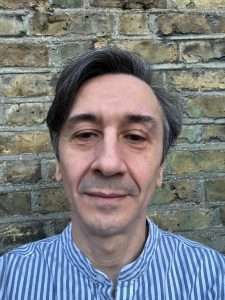
Hugo has been a member of the AAG since May 2025. He has dyslexia, and as someone who has navigated information and environments not always designed with neurodiversity in mind, he brings that lived experience to his role in the group. He works across London’s cultural sector — as an art preparator, exhibition technician and events manager — and holds an MA in Arts and Cultural Enterprise from Central Saint Martins. He believes a museum’s accessibility is as important as its collection.