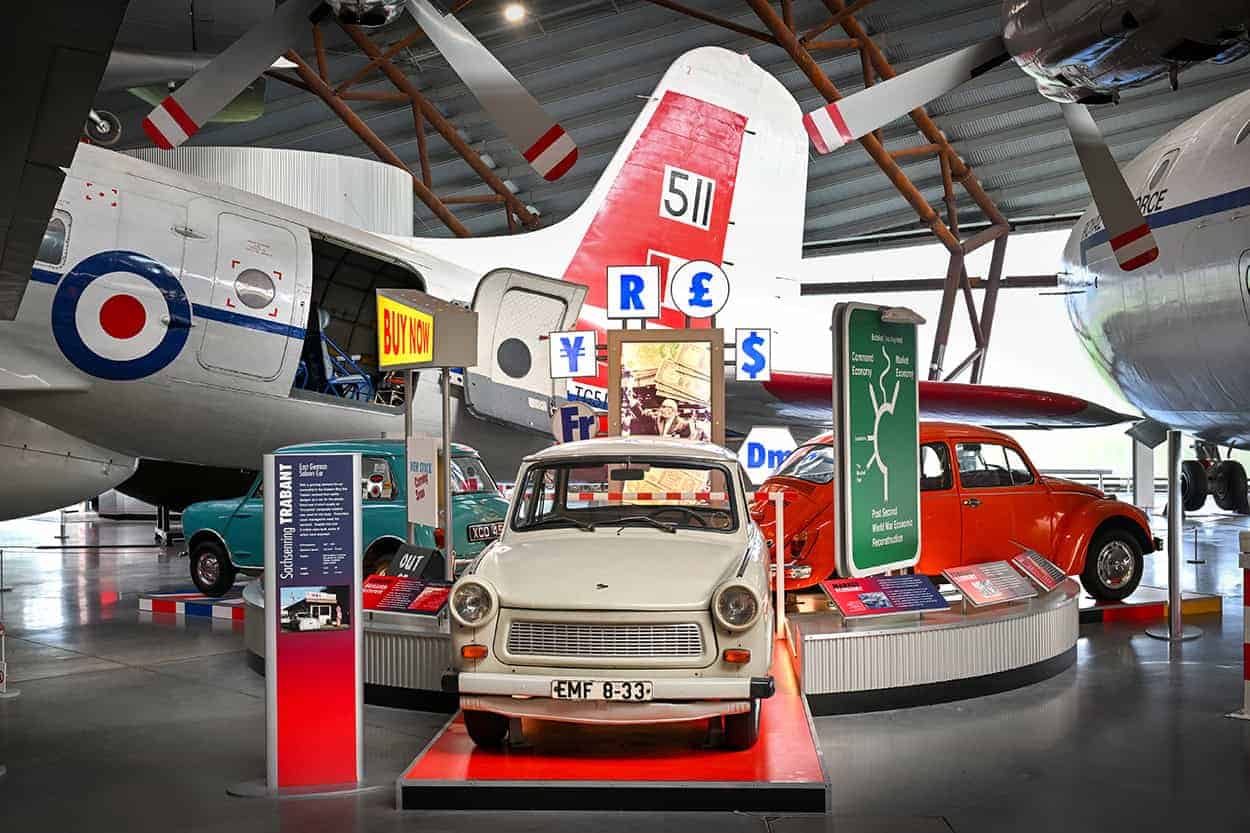
The Cold War affected far more than military aircraft and weapons. It influenced how people travelled, worked and lived on both sides of the Iron Curtain.
The Sachsenring Trabant was produced in East Germany as an affordable “car for the people”. With steel in limited supply, much of its body was manufactured from a plastic-like material called Duraplast.
Demand was considerably higher than production, and customers could wait years to receive a new vehicle. The Trabant therefore provides a powerful insight into industry, consumer choice and everyday life within the Eastern Bloc.
Following the fall of the Berlin Wall, it also became an enduring symbol of German reunification and the end of the Cold War.